
Heritage
Gbongan History
Oral and written accounts of Gbongan’s origins, its movements and its place on the road between Ibadan, Ife, Oshogbo and Iwo.

Archival photograph of the old palace. Date and photographer not yet established.
Gbongan’s story is told through oral tradition and local historical writing. Those accounts agree on some outlines and differ on others, so this section attributes each account and does not force a single timeline.
Where accounts differ — for example on dates for the founder’s departure from Oyo — both are shown with their sources.
Timeline
Accounts of Gbongan
- Late 18th Century
Olufioye and the Journey from Oyo
Oral traditions trace the ancestry of Gbongan's royal institution to Olufioye, whose journey from the old Oyo kingdom is remembered as an important part of the town's origin. Accounts differ on some details of this migration.
Source
- c. 1823–1825
Flight, Migration and the Rebuilding of Gbongan
Historical narratives associate this period with conflict and displacement in Yorubaland. Oral accounts connect the movement of the early settlers and the rebuilding of Gbongan to the events surrounding this turbulent period.

Archival photograph of the old palace. Date and photographer not yet established. Source
- 20th century Oral account
A junction town: Titi Gbongan
Gbongan sits on a route linking Ibadan, Oshogbo, Iwo and Ile-Ife, and became a well-known stop for travellers between Lagos and the east. The local essay recalls traders at the Oke-Church junction and the proverbs painted on passing lorries and buses — short sayings on patience, endurance and trust in God.
Source Local historical essay supplied in the project archive. Personal recollection; not a formal study.
- 1926 – 1948
Olufi Adewale Asabi: Coronation and Reign
A centenary tribute supplied to the project remembers Olufi Adewale Asabi as a reformer and builder. It credits him with uniting the people, expanding the town by giving land freely, building roads linking Gbongan to Iwo and other towns, securing a post agency, and building the palace through direct labour.
The tribute marks the centenary of his coronation on 6 May 1926.
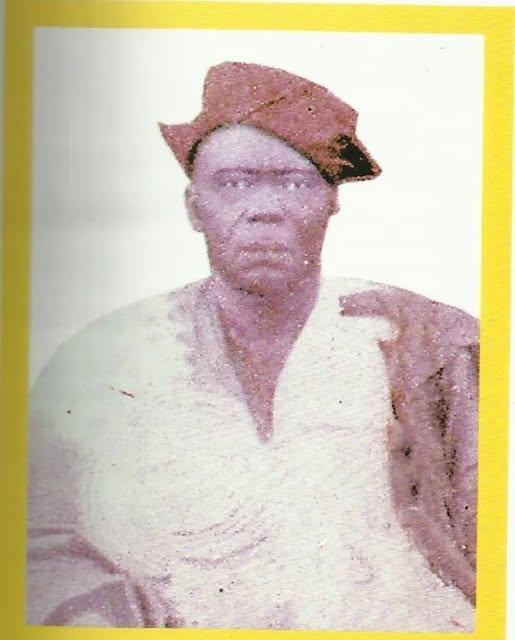
Centenary tribute to Olufi Adewale Asabi, coronated 6 May 1926. Source According to a historical document supplied by Prince Abimbola Asabi, Olufi Adewale Asabi was crowned on 6 May 1926. His reign, which lasted until 1948, forms a documented chapter in the history of the Olufi royal institution.
Help us correct and complete the record
Where accounts differ we show both. If you can add a source, correction or an elder’s account, please contact us.